Notes on Red Blooded Field Notes

img_6165

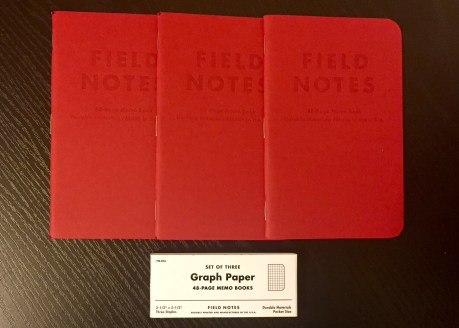
As far as I can tell, Red Blooded Field Notes were made for two reasons. First, so that a Field Notes designer could make a really adorable/cheesy/cute video for his wife on Valentine’s Day. And, second, because the Fall 2011 quarterly edition, Fire Spotter, was so well received that Field Notes wanted to have a similar edition with an open-ended production run (unlike Fire Spotter, which Field Notes limited to 4,000 3-packs).

The all-red cover, including the subtly-embossed logo, looks pretty good, so it’s not a shock that Red Blooded went through a total of three printings before it was discontinued in 2013.  I bought this pack a couple of years ago when they could be found through re-sellers, who were still hawking them for a reasonable price. But these days you’ll have to go through eBay to get them, and a 3-pack often runs $40 or $50.

That amount of money definitely isn’t worth it. Compared to recent editions like Lunacy or Black Ice, Red Blooded is fairly basic. It’s the standard pocket size with 48-pages of 50# white paper and a gray, grid ruling. You might think the books would be bound with red staples – that would make sense – but run-of-the-mill silver ones are used instead.

That’s not meant to knock the good people over at Field Notes HQ. A red edition was obviously a good idea, but I’d recommend holding onto that wallet for now. You never know – a fourth printing is still a possibility. And if it comes, hopefully it’ll have red staples.

img_6879

Additional Notes

  • Of the 30 “Practical Applications” listed in the notebooks’ inside-back cover, my favorites are the following: “03. Lists of Suspected Communists”; “16. Loves Me/Loves Me Not Stats”; and “30. Tape to Cut Through.”
  • According to Jinnie at Three Staples, this edition shipped out with a red “Field Notes Loves You” pencil. Blarg! I wish I had gotten one of those.
  • What about the edition size? Exactly how many Red Blooded Field Notes were made? Nobody knows!


Off Topic: Inch x Inch Button Club

When I was in high school, one-inch buttons were all the rage. I had a small collection of my own at the time; a collection that has, sadly, been mostly lost to time. Still, whenever I’m in a coffee shop or otherwise walking around town, I enjoy spotting the occasional backpack or purse plastered with the tiny buttons. Perhaps that’s why my interest was piqued when I learned about Inch x Inch (via a post on the Three Staples blog) a couple of years ago.

img_6727

Inch x Inch is a monthly button subscription service whose proceeds go to charities that support youth art education. Every month, Inch x Inch finds an artist to create a new 3-pack of one-inch buttons, and for $50 those buttons will show up at your door for a year. I really enjoy the day each month when the little, yellow Inch x Inch envelope appears in my mailbox.

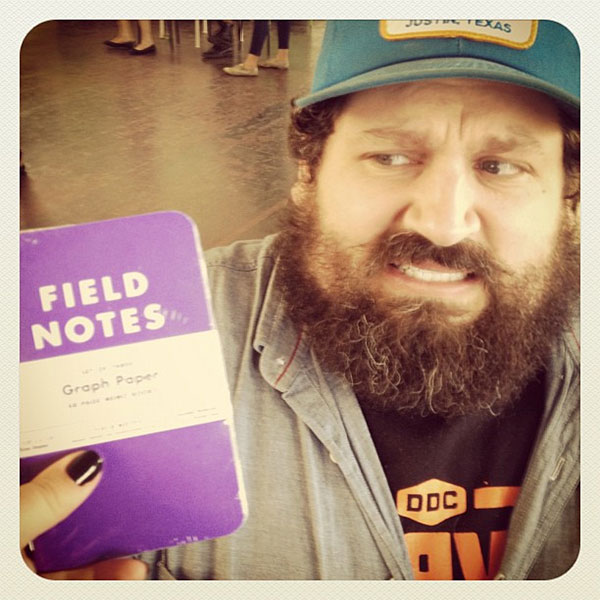
Since Inch x Inch collaborates with so many artists, it’s always a fun surprise to see the design variations. I’ve gotten buttons with little skulls,  donuts, and pig snouts, for instance. But one of my personal favorite sets is from the month Aaron Draplin (of Field Notes fame) created a pack done in his “Thick Lines” style.

cksv8maxeaeevka

In the time that I’ve been an Inch x Inch subscriber, I’ve formed a small tradition. Every month I choose one of the new buttons and attach it to my work bag. Others I often give away, and the rest go into a box that houses a rebuilt button collection. Of course, the charge could be made that subscribing to a monthly button service is a bit frivolous, but the fact that the money goes to a good cause at least provides me with a decent excuse.

img_6728

Notes on Black Ice Field Notes

img_5932

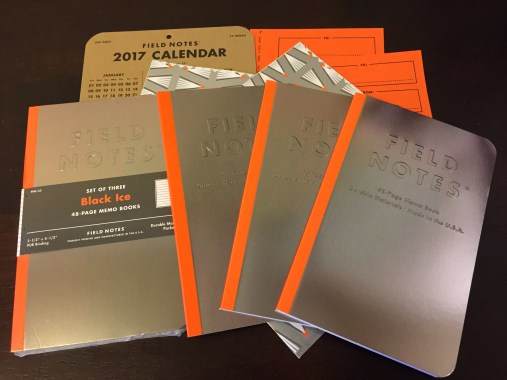
It’s hard to know where to to begin with Field Notes’ 33rd quarterly edition (winter, 2016). In a snapshot, it’s the typical 3.5″ x 5.5″ pocket-notebook with 48 pages of 70#, line-ruled paper. But with this notebook, which Field Notes has named the “Black Ice” edition, there’s actually a lot more going.

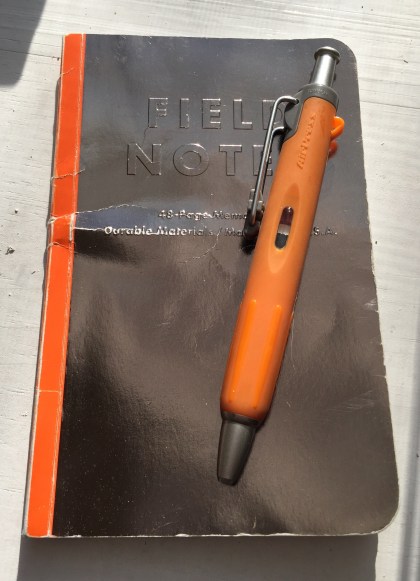
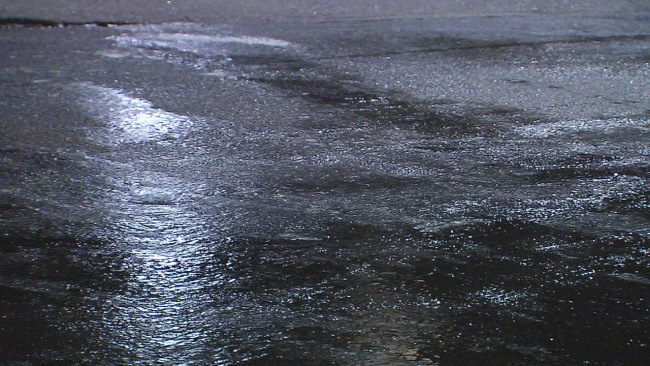
This notebook has a hefty 100# cover stock that is stamped with a dull, reflective foil. The cover shows cracks and scratches with wear, but somehow never seems to leave smudges or finger-prints. It ostensibly represents the shiny, gray coloring of a thin layer of ice on asphalt. It’s a clever design, though not one that’s easy to photograph.

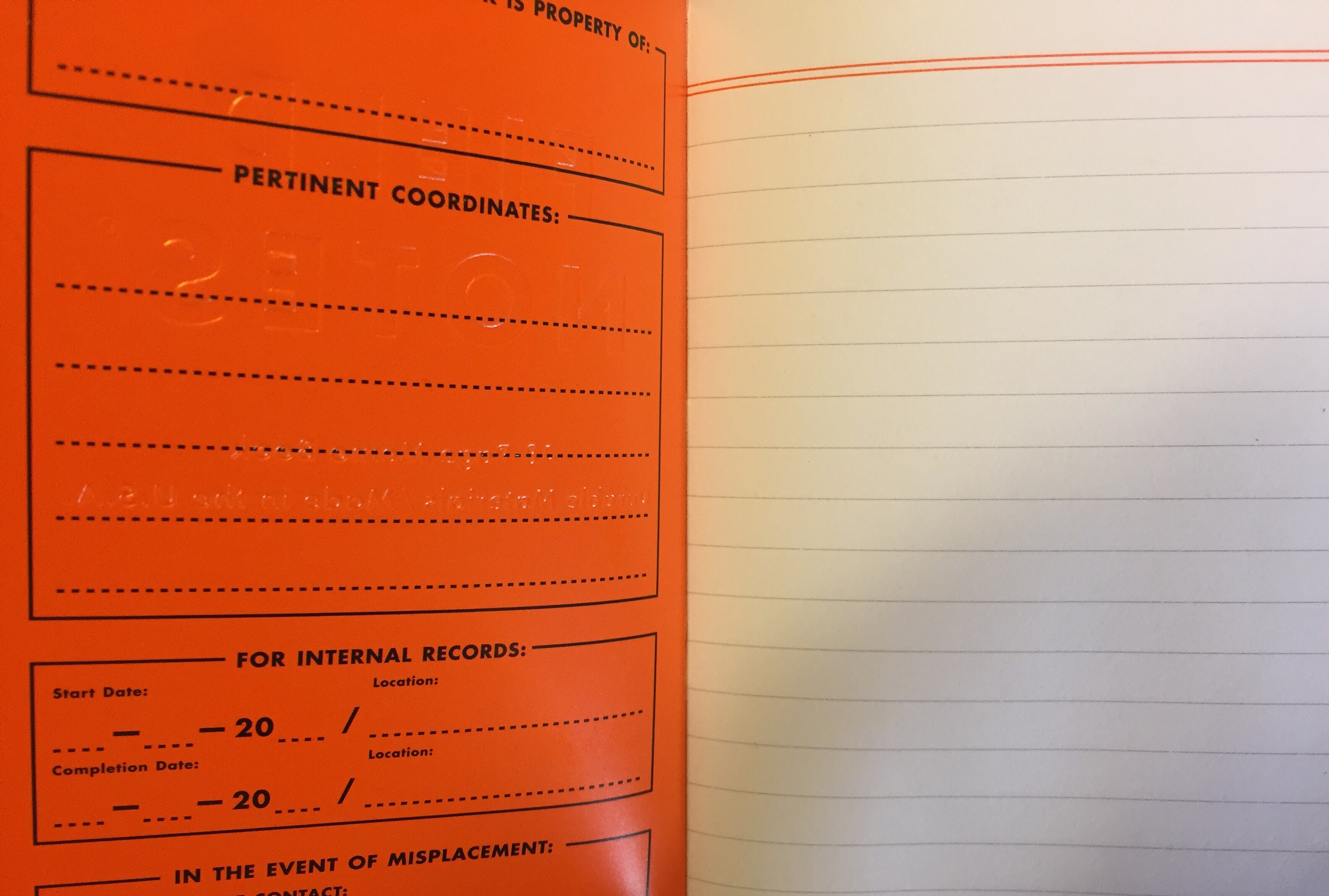
Oddly, there’s also a lot of orange with this edition – the orange spine,  the glossy inside-cover section, and the ruling that lines the header section on each page – which is perhaps an ode to the Field Notes creator, Aaron Draplin. Not that I’ve got nothing against orange, but I don’t see how it makes much sense with the “Black Ice” theme. A dark gray would have worked better, in my opinion.

img_6713

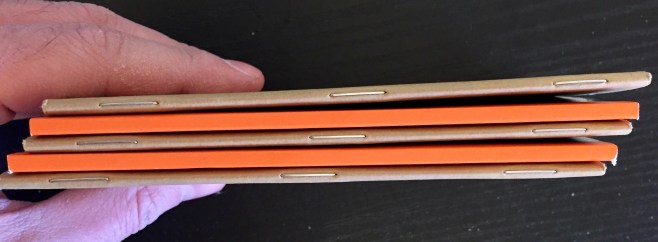
The most unique feature of the Black Ice edition, however, is the use of PUR binding, a first for Field Notes. Instead of stapling the pages together, each leaf of paper is glued into the book, and the spine is then covered by an orange, rubbery hinge. The obvious advantage to PUR-binding is that it creates a much tougher spine for the notebook, though it also adds some bulk and prevents pages from easily laying open. As someone who typically keeps these notebooks in a back pocket, the extra bulk isn’t ideal, though I wouldn’t describe it as particularly cumbersome either.

Overall, anyone who uses Field Notes is likely to enjoy the Black Ice edition, though it doesn’t personally rank among my favorites. The bulkiness of the PUR binding can be a little annoying, and I’m not in love with the use of orange. On the other hand, the reflective covers look good, the pages are hefty, and it’s a durable little book. No doubt this edition will find a lot of fans, but I wouldn’t be surprised by the fact that it also has a few detractors.

img_6712

Additional Notes

  • Of the 30 “Practical Applications” listed in the notebooks’ inside-back cover, my favorites are the following: “02. Curling Rosters”; “24. Plunges Polar-Beared”; and “27. Bells on Bob Tails Rung”
  • With the Field Notes quarterly subscription, this edition came with a couple pieces of wrapping paper and gift labels. It was a smart assumption by Field Notes that these notebooks, released prior to Christmas, would be gifted. Though, I used the wrapping paper I received to wrap other gifts.
  • Check out some other good Black Ice reviews at Fountain Pen Follies, Lead Fast, and Nerd Gazette.

Retro Talk: In Vino Veritas

img_6171

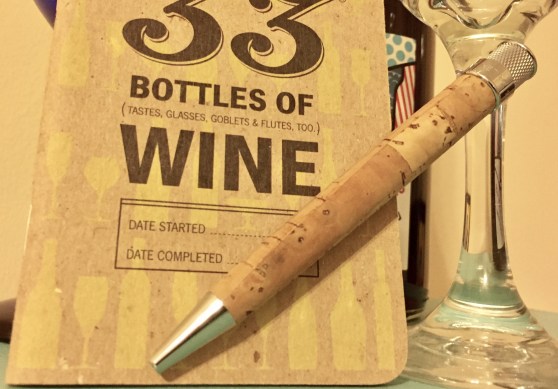
The Retro 51 Vino Tornado was first sold in 2007, but I didn’t hear about it until late 2015 when it was re-issued and sold by the now defunct Paradise Pen Company. The design immediately caught my eye, but it could only be purchased as a $70 pen and pencil set, and, unfortunately, I was really only interested in the pen half. So I put it to the back of my mind, thinking that I’d eventually find someone who wanted to split their set.

A little over a year later, after I’d mostly forgotten about it, Retro 51 announced via social media that the Vino Tornado (pen only) had once again been revived in a limited quantity for Fahrney’s Pens. So, not being one to hesitate, I jumped on the deal.

img_6182

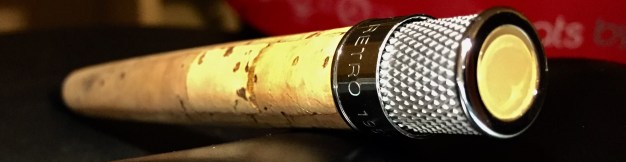
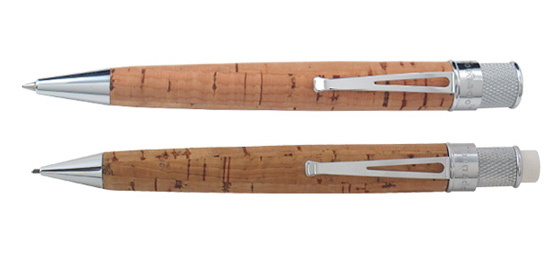
The Vino is undoubtedly distinct from every other Tornado I own. Unlike many of the Tornado designs, which are mostly lacquered wraps, the barrel of the Vino is made of an entirely different material called, according to the marketing material, ‘durable cork.’ The more truthful description might be artificial cork, which feels quite rubbery and soft. (UPDATE: Retro 51 says that it is indeed authentic cork). However, that doesn’t diminish the design. This material makes it a little more comfortable to hold and a little easier to grip. Additionally, the barrel is textured with cracks and divots, giving it a more realistic look and feel.

Aside from the barrel, the remainder of the design is standard for a Retro 51 Tornado. It has silver accents with a tan finial disc, and it comes equipped with the standard 0.7mm Retro 1951 refill. I’m quite happy to own this Tornado, though it would obviously make a great gift for any wine-enthusiast. It pairs well with a tasting book and fancy bottle of shiraz.

img_6178

Notes on XOXO 2016 Field Notes

img_5912

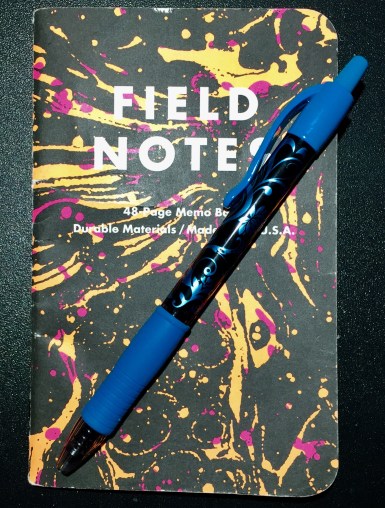
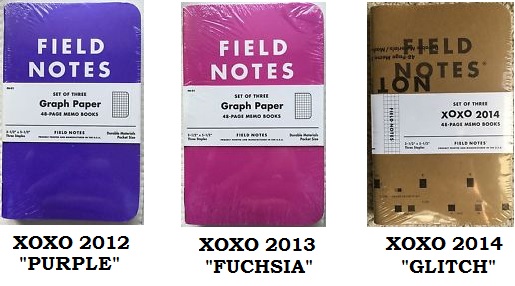
Every year, the halls of the XOXO Festival – an art and technology conference out of Portland, Oregon –  have been complimented by an exclusive edition of Field Notes pocket-notebooks. In 2015, the conference engaged artist Brendan Monroe to create artwork that adorned the notebooks’ covers, which was a very good decision (it just so happens that the XOXO 2015 Field Notes are one of my favorite editions). So for the XOXO 2016 notebooks, I was happy to see that another artist was again involved, and the resulting designs can justly be described as an explosion of orange and pink.

This marbled/tie-dye cover-art was created by Mark Weaver, a designer and illustrator based out of New York, and from what I’ve seen on his website and Flickr account, he has an artistic style that might be described as ‘funky modern.’ For the XOXO 2016 notebooks, he created artwork that is bright, trippy, eye-catching, and generally just pretty cool. Inside the books, 60# white paper is ruled with bright-orange grid-lines, a color that I’ve found looks particularly good behind bright-blue ink.

img_6155

This edition is another win for XOXO, but I hate to talk these notebooks up too much, as they are difficult to find. Attendees of the XOXO conference were easily able to get a 3-pack, but I was able to get mine a few weeks later when extras were made available on the Field Notes website. They sold out quickly, however, and the best bet on finding a set now is through eBay where they will likely be overpriced (though it looks like they might still have some available at their Chicago home base).

So, good luck to you if you’re on the hunt for this Field Notes edition. They are, after all, probably one of the better things to come out of 2016.

img_6154

Additional Notes