Review: Pilot V Razor Point, Porous Point, Extra Fine

Pilot V Razor Point Extra Fine

The Pilot V Razor Point, if nothing else, solidifies my fondness for porous point pens. It has a rich, dark ink, it’s smooth, and it’s comfortable to write with, despite having no real grip section to speak of. It does smear and bleed a little on standard papers, but not enough to cause problems when writing – though it might not be ideal for doodling.

The design of the V Razor Point is fairly basic. It has a silvery-blue color, black trim, and very straight-forward branding on the barrel, along with the letters “EF” (to indicate “extra fine”) on the end of the cap. For a fully disposable pen, it does a decent job of looking professional.

Pilot V Razor Point EF tip

While I really do like the Pilot V Razor Point, it doesn’t quite deliver the same sharp lines as the Sharpie Pen, another porous point pen. But if it comes down to which is cheaper or more easily available, the V Razor Point is a good contender. It provides a good writing experience, and you’re unlikely to be disappointed.

Pilot V Razor Point Extra Fine ReviewExtra Links

Review: Zebra F-301 Compact, Ballpoint Pen, 0.7mm

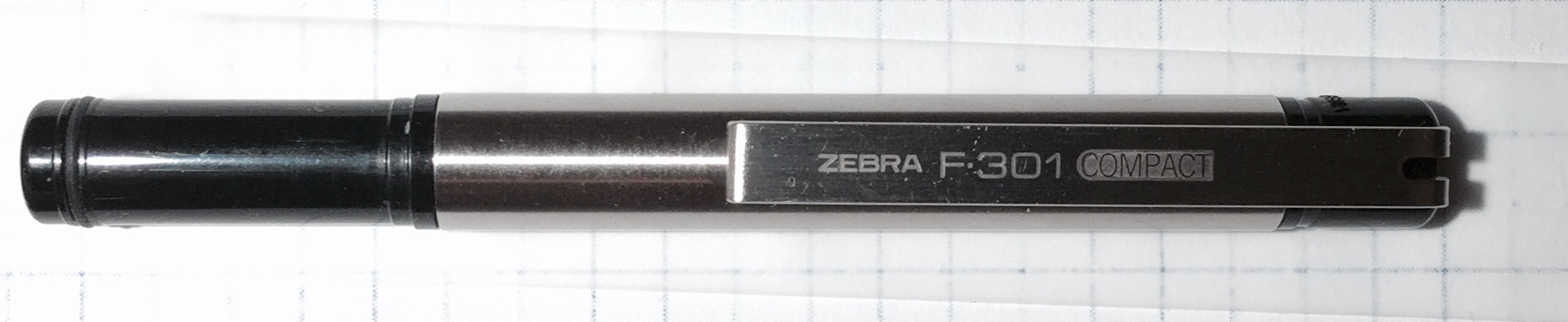
IMG_3038

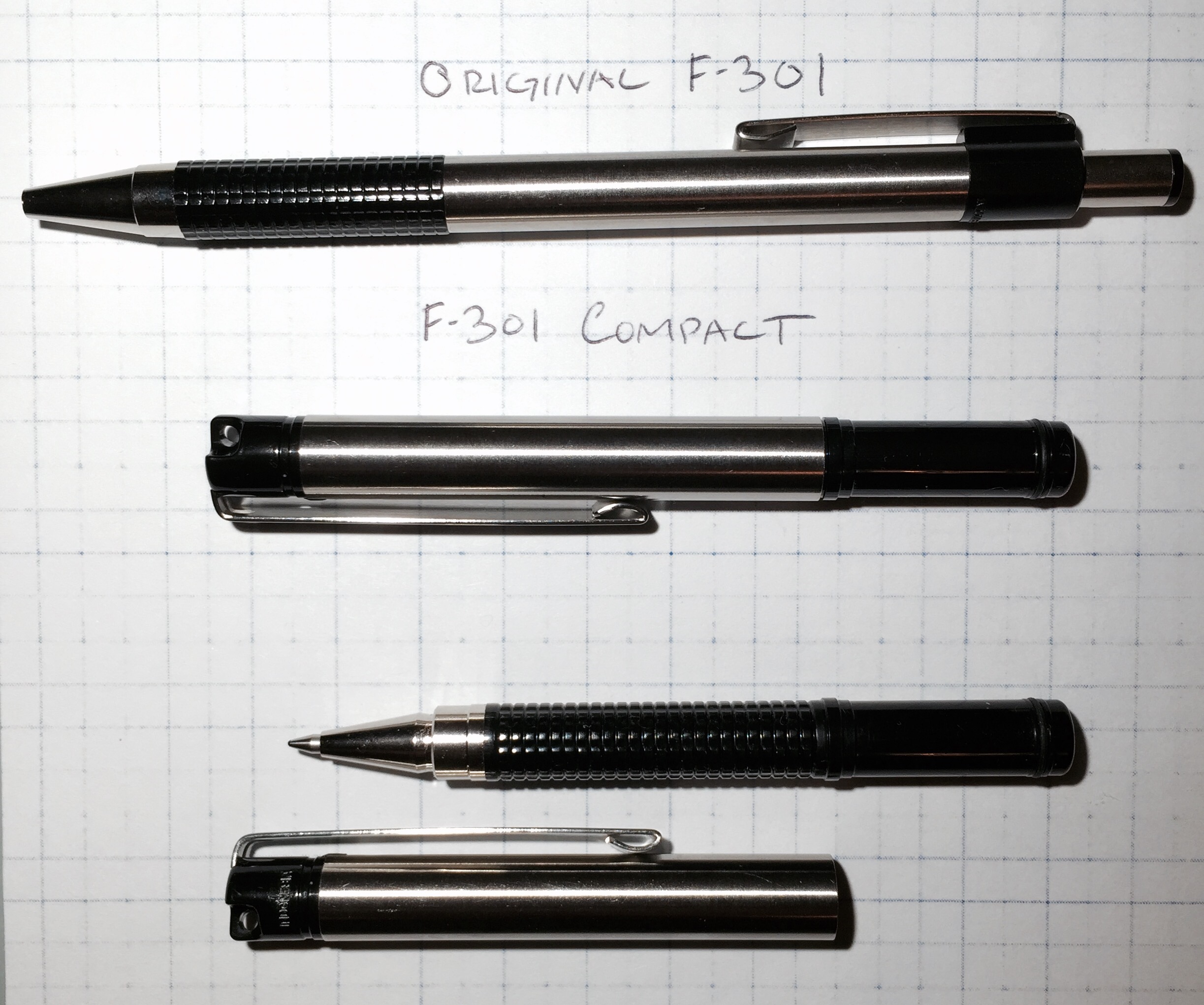
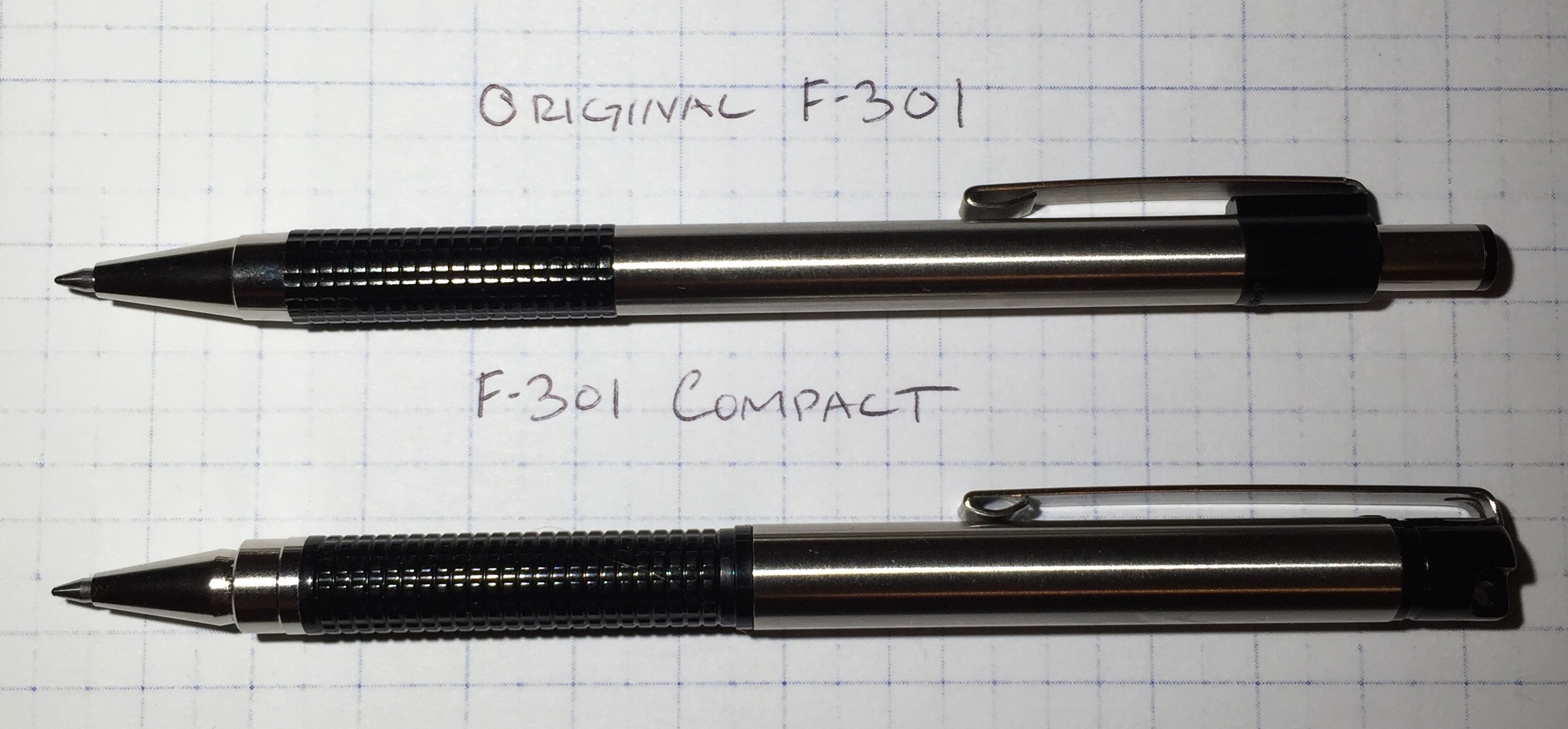
At a measly 5-inches, nobody could criticize the original Zebra F-301 for being a large pen. But in case you find yourself in a situation where every inch counts, Zebra has produced the F-301 Compact, a version measuring only 3.75 inches. The Compact retains the original aesthetic of stainless steel and hard, black plastic, but it otherwise feels like a much different pen.

To achieve this extra-small size, Zebra has created a rather clever design which uses the standard 0.7mm F-301 ballpoint refills, but replaces the original retracting mechanism with a cap. When the cap is on, the pen can be stowed in its 3.75-inch form, but when the cap is posted to the end of the pen, it creates a 5-inch writing instrument. It’s certainly a small, durable design, but it’s unfortunately much more uncomfortable to write with – and comfort wasn’t the F-301’s strong suit to begin with.

IMG_3039

Really, don’t plan on using the F-301 Compact for anything more than jotting down a few notes here and there. The cap posts to the end of the pen loosely, so it tends to twist and slide while writing, and though the extra-large clip is very sturdy, it really just gets in the way. If, on the other hand, you decide to write with the cap off to the side, you’ll find that the pen is too small and unbalanced.

Such a small pen is a neat idea, and I’m sure there are some situations where it might be useful. Most of the time, however, it isn’t worth using such an uncomfortable pen. Instead, either stick with the original F-301 or try a Tombow Airpress for a much more comfortable writing experience.

IMG_3035

Extra Links

Review: Kuretake Bimoji, Brush Pen, Medium Point

Kuretake Bimoji

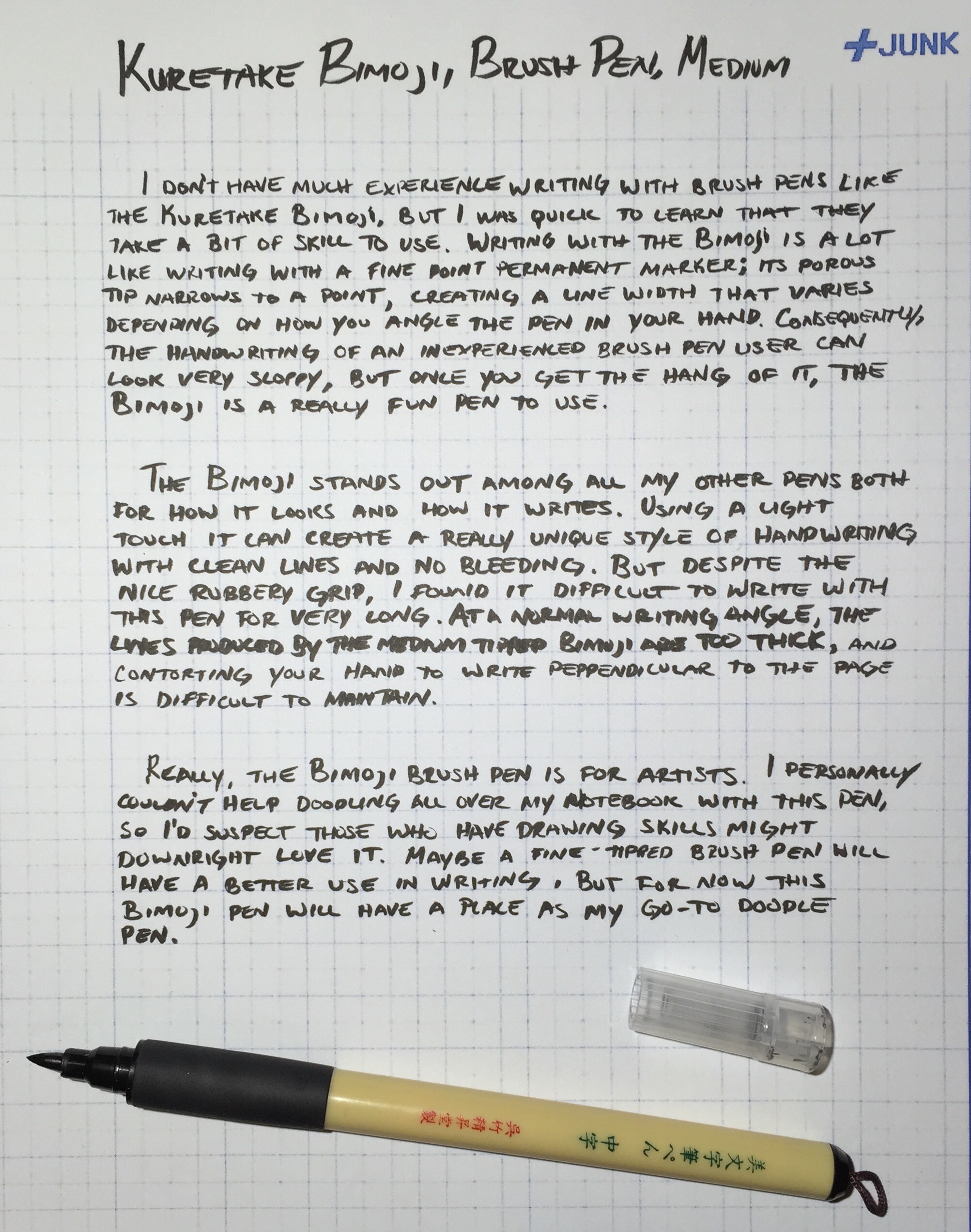
I don’t have much experience writing with brush pens like the Kuretake Bimoji, but I was quick to learn that they take a bit of skill to use. Writing with the Bimoji is a lot like writing with a fine-point permanent marker; its porous tip narrows to a point, creating a line width that varies depending on how you angle the pen in your hand. Consequently, the handwriting of an inexperienced brush pen user can look very sloppy, but once you got the hang of it, the Bimoji is a really fun pen to use.

The Bimoji stands out among all my other pens both for how it looks and how it writes. Using a light touch, it can create a really unique style of handwriting with clean lines and no bleeding. But despite the nice rubbery grip, I found it difficult to write with this pen for very long. At a normal writing angle, the lines produced by this medium tipped Bimoji are too thick, and contorting your hand to write perpendicular to the page is a difficult position to maintain.

Brush Pen Doodle

Really, the Bimoji brush pen is for artists (and for writing in Japanese characters). I personally couldn’t stop doodling all over my notebook with this pen, so I’d suspect those who have drawing skills might downright love it. Maybe a fine-tipped brush pen would be more appropriate for writing, but for now this Bimoji will have a place as my go-to doodle pen.

Kuretake Bimoji review

Extra Links

  • The review at Natto Soup mentions that the cap posts on the end of the barrel in a strange way. Honestly, I wasn’t even sure that the cap was intended to post, so I just kept it off to the side whenever I used it.
  • JetPens has a short video of somebody writing Japanese characters with the Bimoji, and it’s beautiful – it looks like art.
  • Pocket Blonde’s review mentions that the extra fine tipped Bimoji is good for writing.

Review: Inc R-2, Rollerball Pen, 0.7mm

Inc R-2 Rollerball

The Inc R-2 rollerball pen has a thick, sturdy look about it, and it feels like a permanent marker in the hand. It’s fully disposable, yet seems durable enough to hold up to the abuse of banging around in a backpack. I was excited to use the R-2, but when I finally had a reason to pull one out and write, I was quickly disappointed.

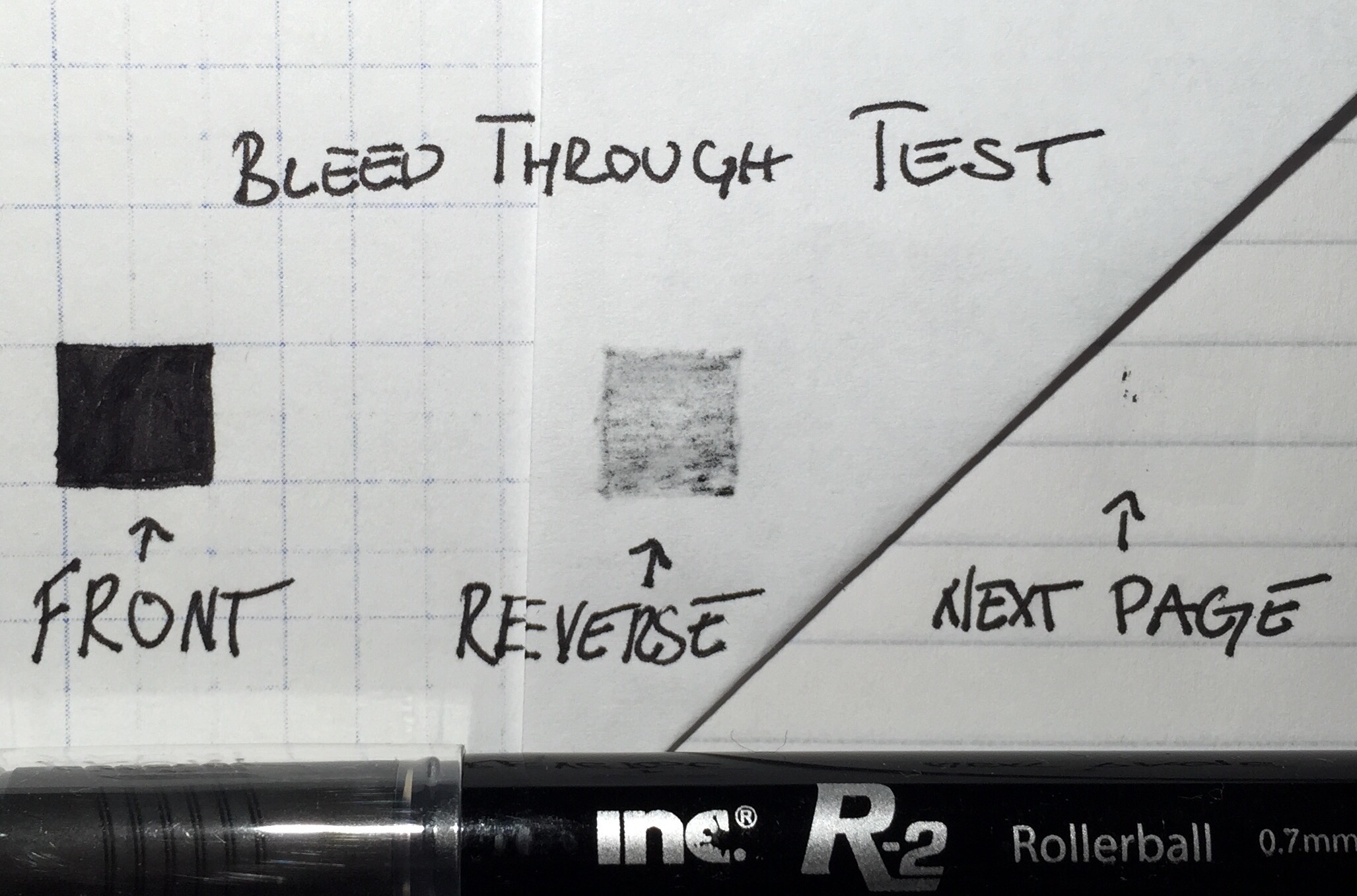
The R-2 has a decent grip, making it fairly comfortable to hold, but it delivers neither the smoothest nor the cleanest lines. It has a really nice dark ink, but it bleeds through the page. Worst of all, the flow is just no good – there is no consistency in line width, and the ink frequently skips out.

Inc R-2 bleed through test

The R-2 is an inexpensive pen – I bought a 2-pack for one dollar – but they’re still not worth the trouble. The writing is so inconsistent that they’ll only frustrate you. Instead, spend an extra dollar or two to get something at least a little better.

IMG_3004

Extra Links

Review: SKB Click Ball, Ballpoint Pen, 0.6mm

SKB Click Ball

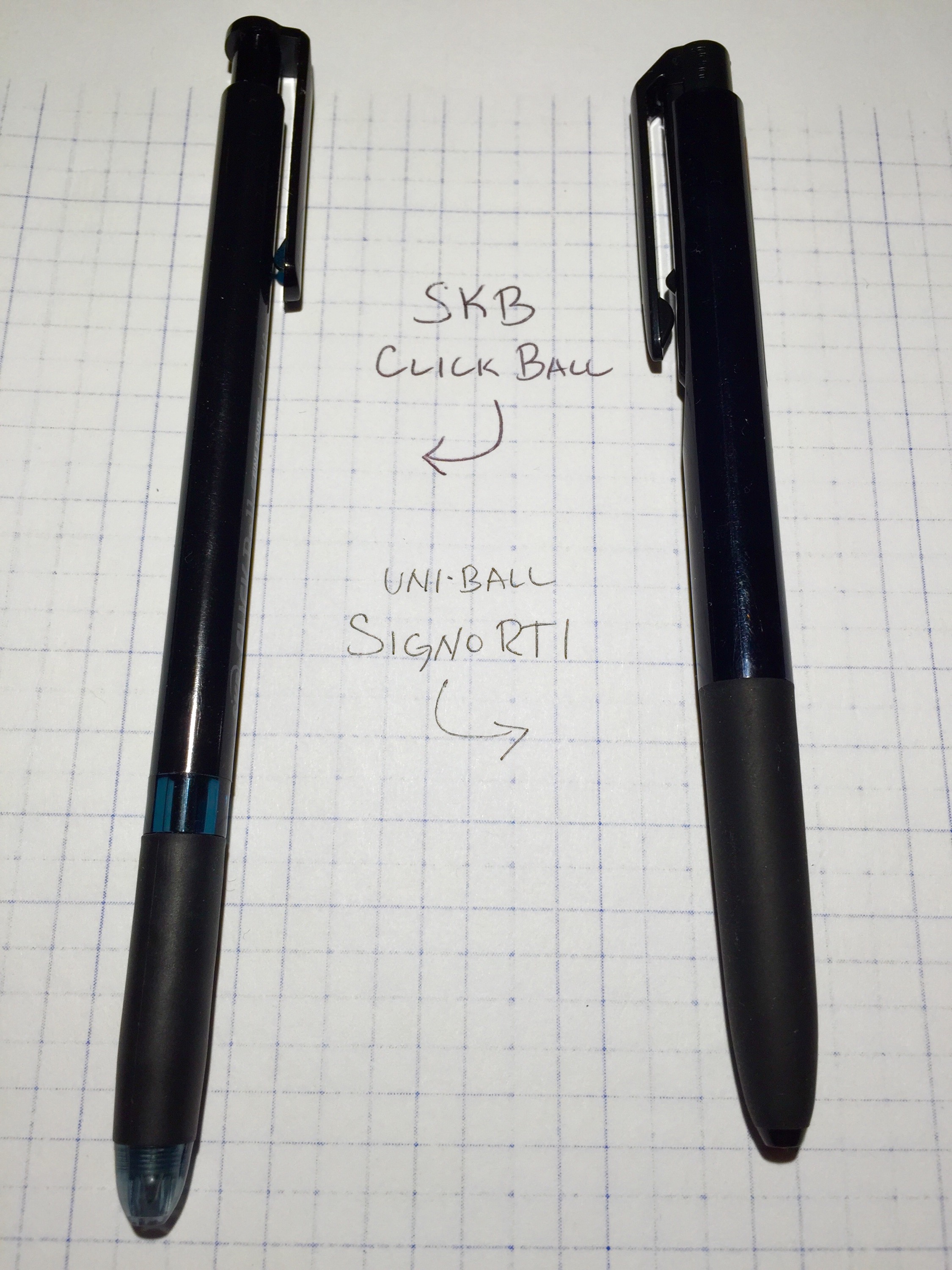
The most striking thing about the SKB Click Ball is how much it looks like the uni-ball Signo RT1 gel pen. The all-black design, the shape of the barrel, and even the knock/click mechanism seem nearly identical (click here for a comparison pic). It’s as if the Click Ball is the Signo RT1’s younger brother, albeit one that still has thing or two left to learn.

The Click Ball provides a great writing experience once it gets going: it’s smooth to write with, the ink doesn’t blob up, and there’s no smearing. Getting to that point, however, can be a bit of a struggle. After the pen has been sitting, it seems like the first few words drag on the page, and there are some intermittent issues with ink skipping.

SKB Click Ball Parts

Like SKB’s Soft Ink pen, I’m not overly impressed with the Click Ball. It’s not bad considering that it’s something of an economy-priced pen in Taiwan. To get it in the U.S., however, you’re probably paying more money than it would be worth. And if you just like the look of the pen, you’d be better off with the Signo RT1.

SKB Click Ball Review