Review: AmazonBasics, Gel Ink, 0.5mm

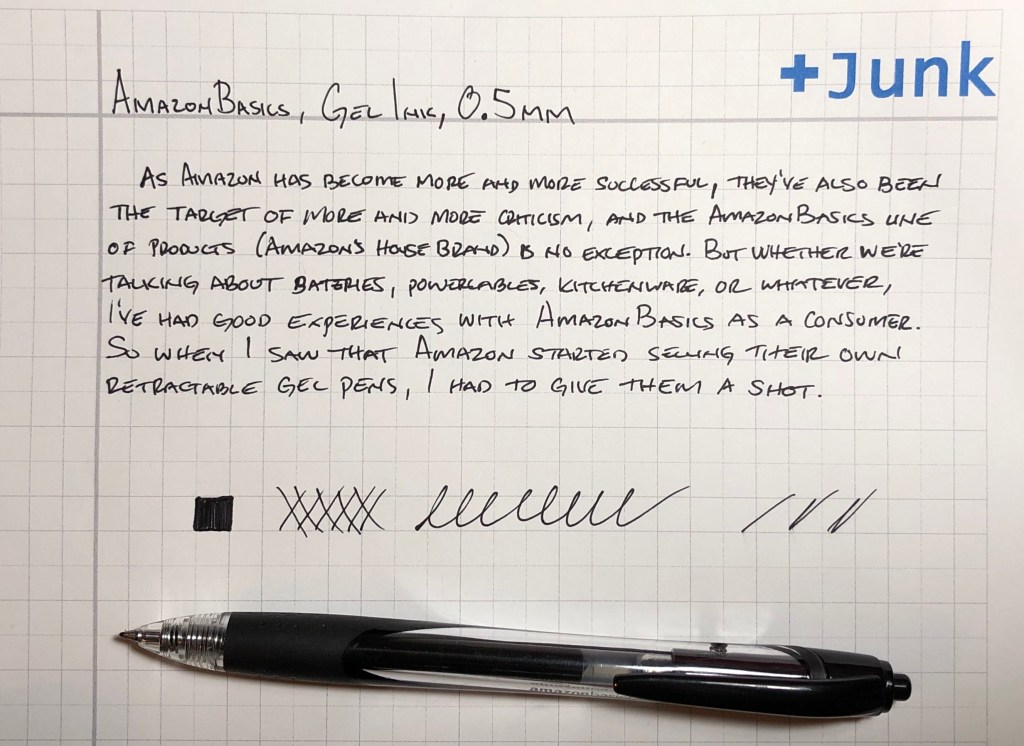
As Amazon.com has become more and more successful, they’ve also been the target of more and more criticism, and the AmazonBasics line of products (Amazon’s “house brand“) is no exception. But whether we’re talking about batteries, power cables, kitchenware, or whatever, I’ve had good experiences with AmazonBasics as a consumer. So, when I saw that Amazon started selling their own retractable gel pens, I had to give them a shot.

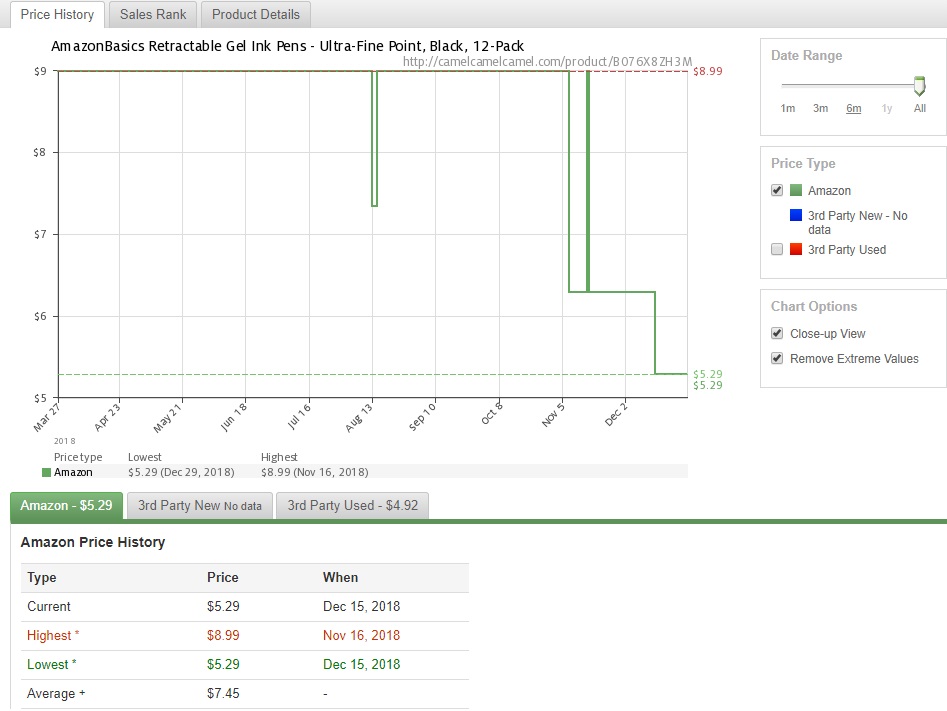
Currently, Amazon doesn’t offer many options with these pens. They come in two colors, black or blue, and two sizes, 0.7mm or 0.5mm. The price fluctuates, but they seem to hover around the $6 mark for a pack of 12, which is pretty good for a “premium plastic” style gel pen. For comparison, the Pilot G2 (the most popular pen in this category) is usually double that price.

Since the AmazonBasics gel so much less expensive than its competitors, I’d expected a sharp decrease in quality, but everything has worked well for me over the last month that I’ve been using these pens. They write clean with low smearing, the ink is dark, and the grip section is comfortable to hold. I’ve had no issues with ink leaking, the knock hasn’t jammed, and the plastic clip has so far resisted snapping off.

So, if you’ve not sworn off Amazon after one or more of the company’s controversies, then I have to recommend this pen on its price point alone. It’s not my favorite “premium plastic” gel, but I’ll be happy to keep a box of these in my desk for anyone that comes along asking to borrow a pen. But if you dislike or Amazon, or if the price ever rises, then check out the Zebra Sarasa – it is uncannily similar.
Review: Poketo Linework, Gel Ink, 0.5mm

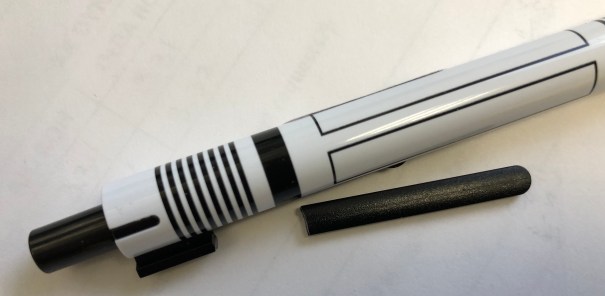
The Poketo Linework gel pen has one great thing going for it: it looks pretty cool. This retractable pen comes in 5 different designs that each have a distinct architectural look to them. And the “B+W Patterns” design – the one that I picked for myself – reminds me of a Star Wars’ Stormtrooper costume.

The Linework has a thick barrel, making reasonably comfortable to hold, and the gel ink is fairly dark with a low smear. The refill itself is generic (the only marking reads “375-217”), and no ball size is listed anywhere – though, to my eye, it seems to be 0.5mm. But, oddly, Poketo’s website says the pen is refillable with a Zebra Styluspen LV, which is a 1.0mm ballpoint refill.

None of this really matters much, however, because the pen is made so cheaply that it isn’t worth purchasing. The barrel is entirely plastic, the clip is flimsy (mine broke off the first day I used it), the refill is small, and, in the pen I have, it’s also slightly leaky.  If this were a 50 cent pen, I might understand, but Poketo is currently selling these for $4 each (or $18 for all five designs).

Cool designs or not, these pens just aren’t worth that price for the little value and use that you’ll get out of them.

Extra Links

Multi-Pen Review: Zebra Surari Sharbo 1000

I’ll admit, I wasn’t quite sure what I’d gotten when I purchased the Zebra Surari Sharbo 1000. I’d stopped into the Kinokuniya Book Store during a recent visit to New York City, and stumbled on the store’s Japanese stationery section tucked away in its basement. The Surari Sharbo’s bright yellow barrel caught my eye, but since I couldn’t read the Japanese packaging, I had no idea that it was a multi-pen when I bought it.

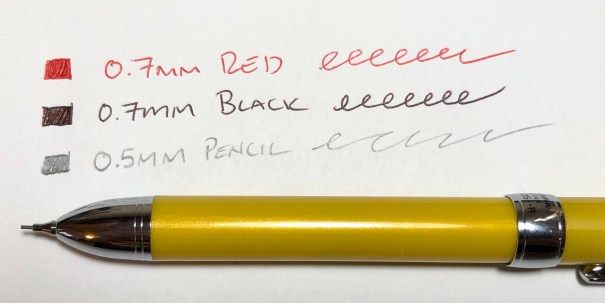
The Sarari Sharbo 1000 contains two ink cartridges, 0.7mm black and red ballpoints, and a 0.5mm mechanical pencil. In order to switch between red ink, black ink, and the mechanical pencil, you twist the pen in either direction around its midpoint. There are no markings on the barrel to denote which you are getting, so I frequently found myself having to examine the pen’s tip to see if I’d selected the proper one.

The red ink is smooth and doesn’t smear, and the black feels somewhat sluggish. After switching to the pencil, the top becomes clickable to eject the lead, and the the finial twists off to reveal a small eraser. The mechanical pencil lead seems fairly resilient but generally not noteworthy. Just be careful switching back to a pen tip, as the lead will snap if you forget to push it back in.

I’m not a frequent user of multi-pens – obviously, I bought this one by accident –  but I can confidently say that better ones exist than the Zebra Surari Sharbo 1000. Though I love the bright yellow plastic barrel, I just never got used to the twisting mechanism, specifically the lack of lead/tip indicator. Perhaps this is something I’d have gotten used to over time, but it is enough of an annoyance that I can’t be bothered to stick with it that long. And for the $20 cost, this multi-pen just doesn’t seem worth the trouble.

P.S. My fiancée insisted that I create this GIF of the multi-pen in action.

Review: Muji Smooth Writing, Gel Ink, 0.5mm

img_2001

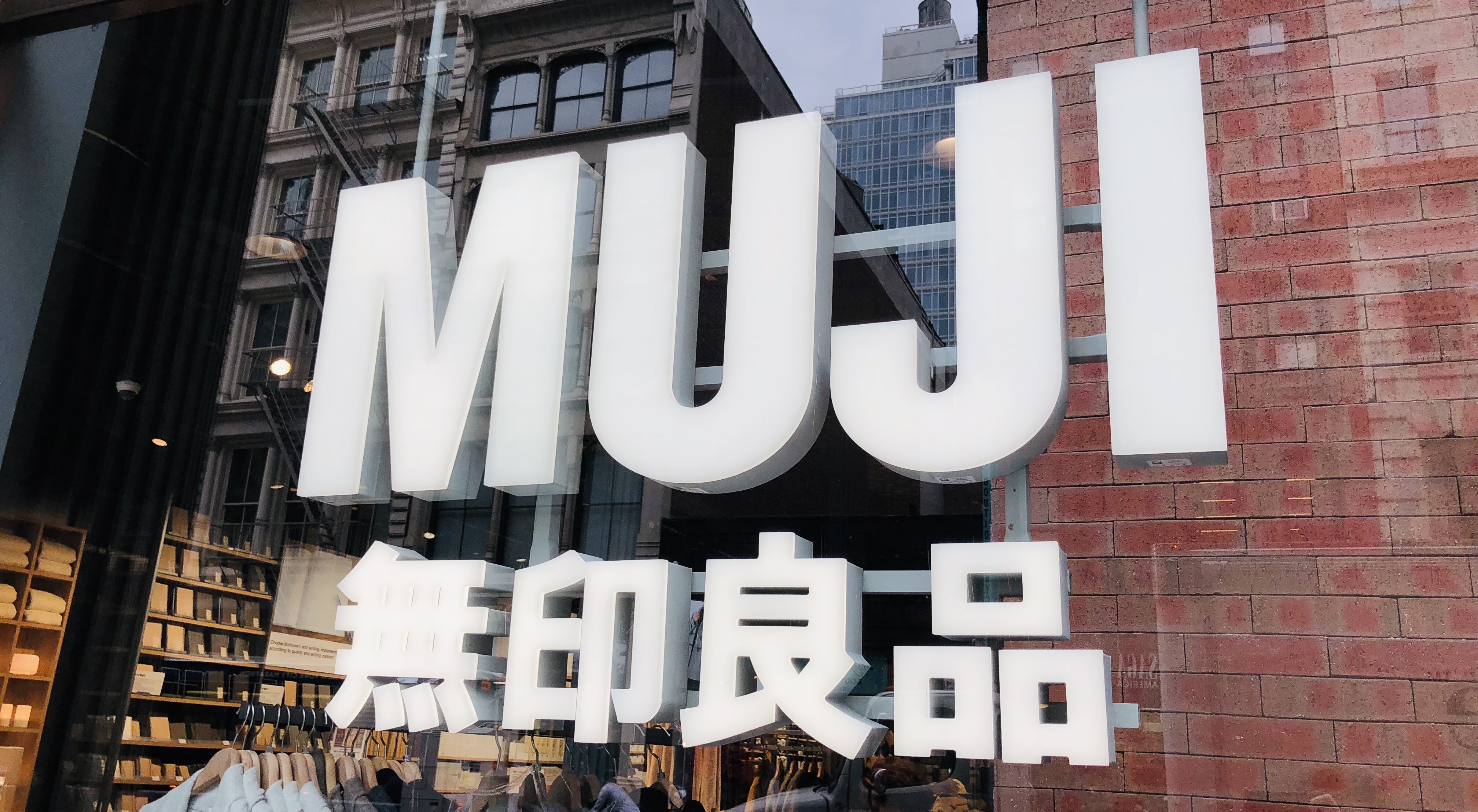
Since Muji has only a handful of retail locations in the United States, I make sure to visit whenever I’m in proximity to one. So when I was in New York a couple of weeks ago, I hit up their SoHo location and picked up a few fresh Muji pens, including this $1.50 gel. If you know Muji, then you’re probably familiar with the company’s “no-brand” products. Unlike your BIC Cristals and Pilot G2s, this pen doesn’t really have a name, but it’s simply referred to as a “Smooth Writing Gel Pen.”  Though there’s a little bit more to it than that.

Unlike the standard Muji gel pen I sometimes see in the wild, this pen is retractable and has a handy spring-loaded clip. It has a good, dark gel ink that doesn’t smear too much, and as the name suggests, it is a smooth writer. It is also a reliable writer, so you wont be bothered by ink that skips out. If you’ve ever used a Zebra Sarasa Clip, this pen will feel very familiar (in fact, it’s likely that Zebra clandestinely produces this pen for Muji).

img_1879

My only complaint with Muji’s Smooth Writing pen is that I don’t really like the grip section – the rubber grip has an odd “pencil eraser” feel to it. Though, admittedly, this doesn’t bother me so much as to make me stop using the pen.

If you’re going to be at a Muji store any time soon, then maybe grab one or two of these on your way to the check-out. Otherwise, if you’re looking for a decent gel pen with a spring loaded clip, then it’ll probably be easier to find a Zebra Sarasa Clip instead. You’ll hardly notice the difference anyway.


Squire Special Edition: Field Nuts

img_1996

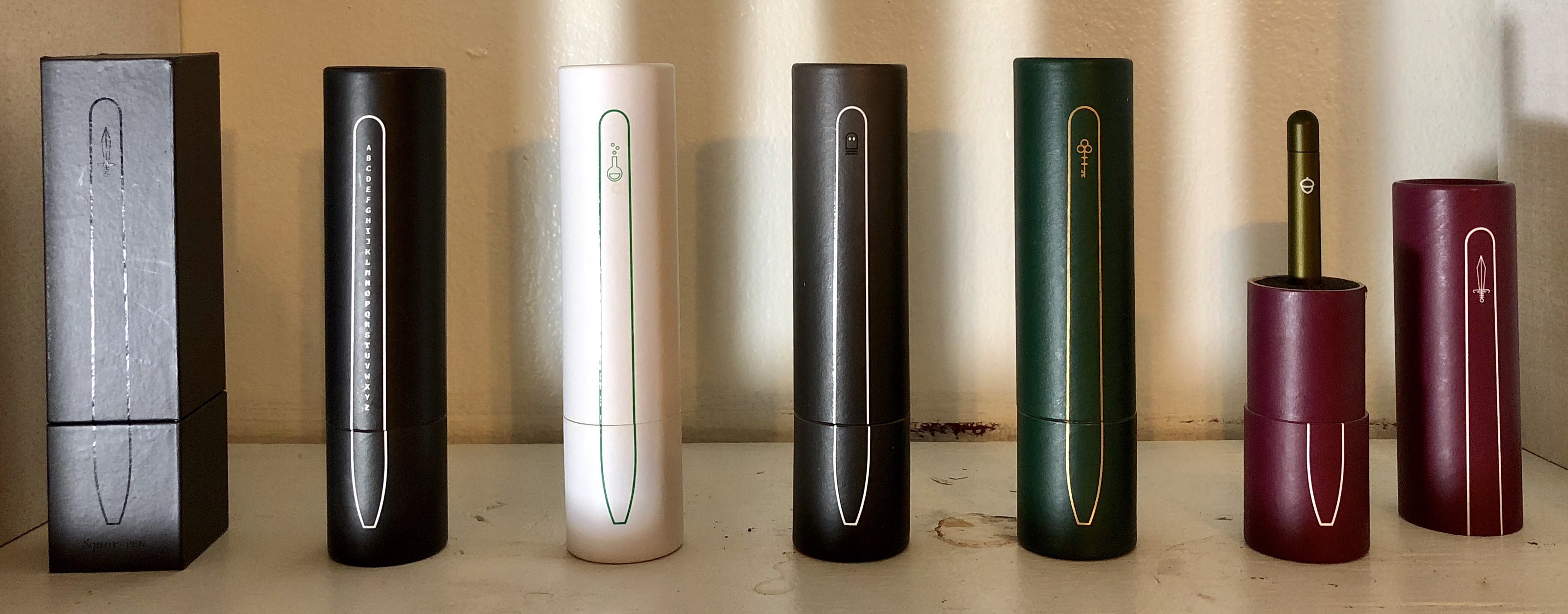
It’s been nearly a year since Baron Fig shipped the final Squire rollerball pen from their now defunct Squire subscription service, but that hasn’t stopped them from pumping out the special editions. Since then, Baron Fig has released the orange Mysterium, the yellow Bolt, a Squire made of stainless steel, and, recently, one made of copper. Though a couple of those made me take notice, none of them enticed me so much that I wanted to place an order.

I have enough Squires, after all, and they all feature pretty much the same mechanics and refill. However, a couple months ago, this Field Nuts Edition Squire popped up for pre-order, and it broke my resolve.

img_1827

Unless you’re a crazed fan of Field Notes like I am, you’ve probably never heard of “Field Nuts.” Essentially, it’s online fan group for Field Notes users, mainly based on Facebook but also with some presence on Instagram and Twitter. A member of that community partnered with Baron Fig to make a special edition Squire that is painted with the Field Nuts logo. The community voted on the color – they went with this leafy green (reminiscent of the “gumdrop green” notebook in the Shenandoah edition) – and, boom, here it is.

I don’t expect that many of you out there will care much about this pen, but as a daily user of Field Notes, I find it pretty cool. Baron Fig wouldn’t say how many of these pens were made in total (probably somewhere between 50-150), but they currently seem to still have a few available. I think this will satisfy my Squire itch for a little while, but if Field Notes ever officially partners with Baron Fig, then I may as well just send them my wallet.

img_1995