Review: Uchida Reminisce, Gel Ink, 0.7mm

img_6748

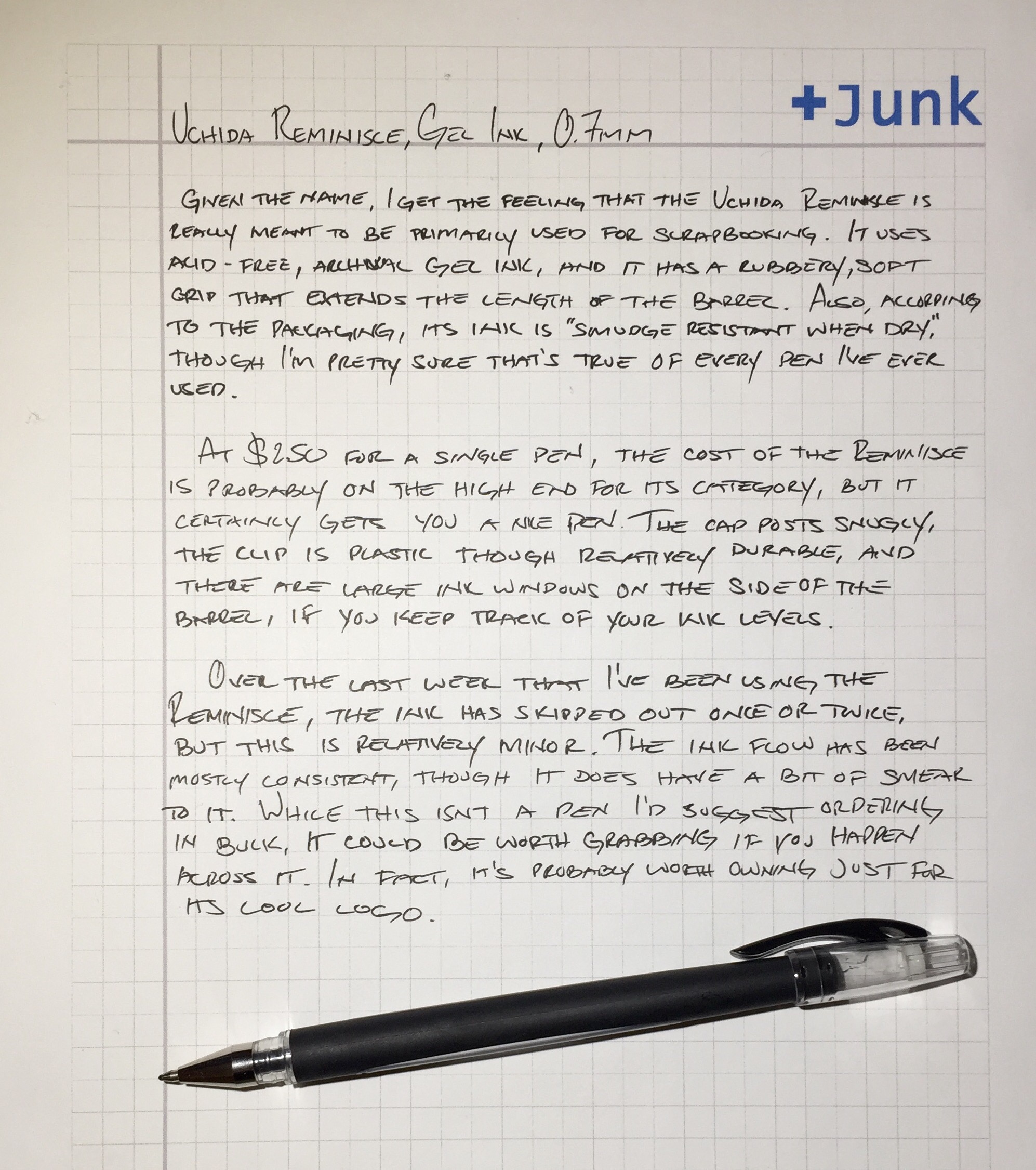
Given its name and the fact that I found it in a craft store, I get the feeling that the Uchida ‘Reminisce’ is intended for scrapbookers. Though the full name, as far as I can tell, is the Marvy-Uchida Gel Excel Reminisce, and though its acid-free, archival ink could be good for scrapbooking, it can really be used just like any other gel pen. In fact, it has a rubbery, soft grip running the length of the barrel that makes it quite comfortable for general writing.

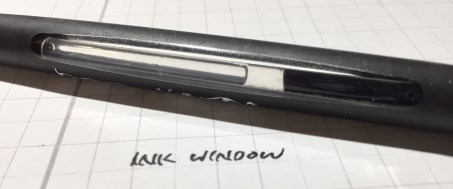
It’s a nice pen overall, though at $2.50 the cost of the Reminisce is probably on the high-end for its category. The ink flow can sometimes run a bit heavy and skips out on the rare occasion, but it works flawlessly the majority of the time. The cap posts snugly, and the clip is tight and relatively durable for being made of plastic. Additionally, large ink-windows are positioned on the side of the barrel, making it convenient to see when the ink is running low. And in case that isn’t enough, the Reminisce’s packaging also boasts of ink that is “smudge resistant when dry” (though I’m pretty sure that’s true of every pen I’ve ever used).
img_6757

The Reminisce isn’t the sort of pen I’d suggest bulk-ordering or driving across town to find. Even if you’re looking for a scrapbooking pen, almost any gel will do a similar job, and good ones like the uni-ball Signo and the Pentel Energel are likely easier to find. Still,  if you happen across one, I think the Reminisce would be worth grabbing off the shelf.  And if you don’t like it for its performance, hopefully you will still appreciate the great curly-cursive logo printed across its barrel.

img_6755

Review: uni-ball Vision Elite, Rollerball, 0.8mm

img_6224

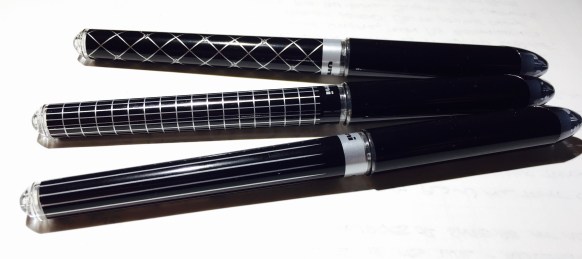
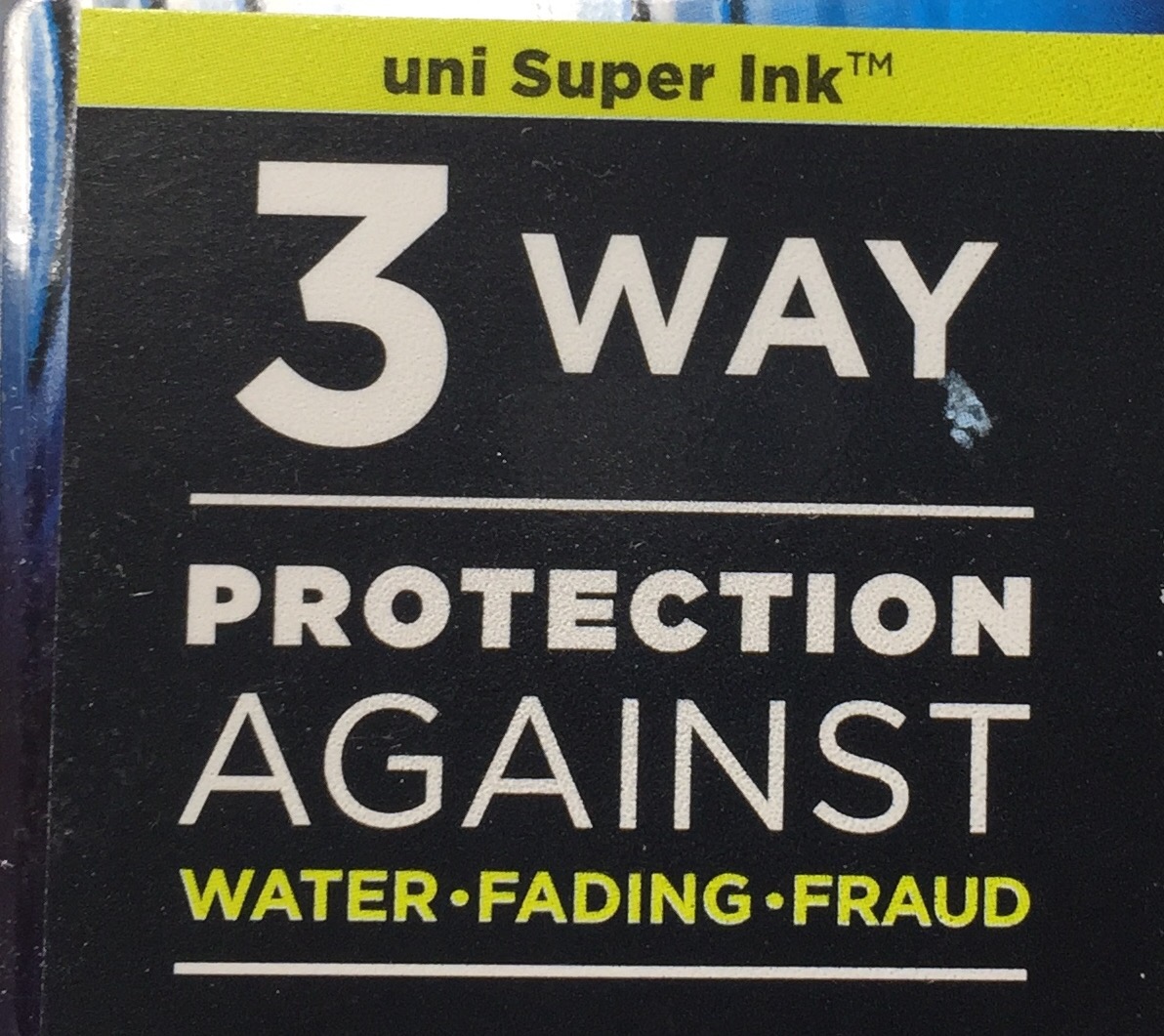
At 2 to 3 dollars apiece, the uni-ball Vision Elite is a pen that’s positioned at the top-end of the inexpensive, plastic market. It’s the sort of pen you’d expect to be handed at a car dealership just before signing a lease agreement. It contains a dark ink, has a sturdy clip, and features a thick, robust barrel. However, the most impressive thing about the Vision Elite is its ink – advertised as “super ink” – that barely smudges or smears at all.

On the other hand, the ink doesn’t flow all that consistently, and this 0.8mm tip provides a much bolder line than I expected (although, uni-ball does make finer-tipped versions, at 0.5mm and 0.7mm). Additionally, I should mention that I had problems with the cap, which would constantly pop off whenever I tried posting it to the end of the barrel. Though, these “designer series” versions of the Vision Elite, which differ only in aesthetics, do look pretty snazzy.

img_6225

If you’re looking for a fairly inexpensive, low-smear rollerball pen, then the Vision Elite is a good choice. If you can tolerate some smear, then I’d recommend checking out the Pilot Precise instead. Or if you’re okay with a gel pen, then the uni-ball Signo 207 contains similar low-smear ink as this pen. But overall, the Vision Elite is a decent, smooth and comfortable pen, even though it wouldn’t be my first choice.

img_6223

Extra Links

  • Art Supply Critic has a review that features the red and blue versions of the Vision Elite. He mentions some bleed through issues, which will definitely happen on thinner paper.
  • Here’s a very positive review at The Clicky Post. It’s mentioned here that refills for the Vision Elite can be purchased separately, though you’ll spend about the same amount of money if you just decide to buy a new pen.
  • And, of course, this was reviewed by The Pen Addict. It’s mentioned here (and in the pen’s advertising) that the Vision Elite is airplane safe. Though, honestly, I’ve never had a problem with pens exploding on airplanes. So I’m not sure that this is a unique feature.

Squire Sub No. 01 – The Alphabet Edition

img_6208

Late last year, the guys at Baron Fig announced three new subscription services; one for their Confidant notebooks, one for their Archer pencils, and one for their Squire pens. I already have too many notebooks, and I don’t really use pencils. But the Squire pen subscription – that is something I was interested in, especially after my original Squire, from Baron Fig’s Kickstarter campaign, was lost. So I purchased the subscription, and the first of four quarterly edition Squires arrived at my doorstep earlier this week.

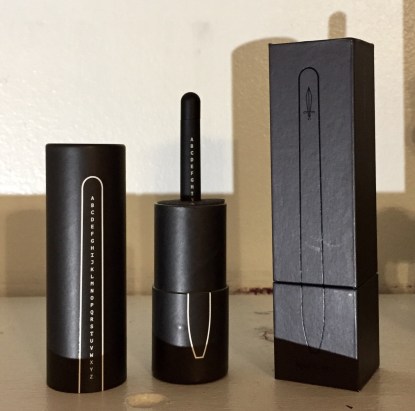
With this first limited edition, called “Alphabet,” Baron Fig played it pretty safe. There is very little I can say here that I didn’t already write in my review for the original Squire – it’s identical in regards to size, shape, refill, construction, and twist mechanism. The big difference is that this edition has a matte black body, whereas previous color options were silver and charcoal. And in place of the Squire sword logo, this edition has the 26 characters of the English alphabet printed vertically down the pen’s barrel.

img_6210

Besides that,  the packaging has also been updated from a square box to a rounded one (a close resemblance to the current Retro 51 Tornado packaging), and the twist retracting mechanism seems a bit smoother.

Although the ‘alphabet’ theme seems superfluous, I do think it makes sense for the very first pen in the Squire subscription-series to be fairly standard. Frankly, I’d have been just as happy with an all-black “stealth” edition. Still, I wouldn’t mind something a little more exciting next time, such as a bright color or (dare I suggest?) a pocket clip. But whatever Baron Fig ends up doing with the second Squire in this subscription-series, I suppose it’s a good sign that I’m looking forward to finding out.

img_6209


Review: RNG Products SQ1, Pressurized Ballpoint, Fine Point

img_6139

Back in August 2016, the SQ1 by RNG (Rise-N-Grind) Products was successfully funded on Kickstarter to the relatively modest tune of $10,299. To be fair, at $25 per pen, it’s probably one of the least expensive Kickstarter pens I own, yet it’s still a pen that I happen to like. And, frankly, there’s a lot to like about the SQ1, not least of which is the “shipwrecked copper” cap.

Though other color options/combinations were made available through the Kickstarter campaign, I chose these weathered ends against an anodized blue barrel. It’s one of the coolest-looking pens I own, and it’s a killer piece for the pen holder on my desk. It’s pleasant to write with too; the grip section is patterned with divots that add a nice visual and practical touch. It’s comfortable to hold, and the included Fisher Space Pen refill is always a great choice.

img_6141

Since the SQ1 is made from CNC-machined aluminum, making it durable and slender, it’s tempting to think of it as an “everyday carry” pen – it is, in fact, advertised as such. However, I think this classification is a mistake. For one thing, the cap screws on and off, requiring four full, squeaky rotations. Though there is threading at the top of the pen that allows for posting, it’s still a little tedious – tedious enough, anyway, that you wont want to be using the SQ1 for taking short, frequent notes.

Additionally, the SQ1 has no clip, a trait that has caused me trouble in the past. If you wish to take this pen out into the world, you must be very mindful of it, lest is roll off a table or fly out of a pocket. Instead, this is a pen that would be good for taking long notes during a lecture or meeting. It can bang around a bag without trouble, yet still be fashionable and functional when it’s time to sit down and write.

img_6140

Extra Links

Review: Retro 51 Hex-o-matic, Ballpoint, Medium

img_6129

Put them side-by-side, and the Retro 51 Hex-o-matic looks a lot like an ‘everyday carry‘ version of the Retro 51 Tornado. But really, aside from the knurled-metal end, the two pens share little similarity. The Hex-o-matic is thin, clickable, and durable. It has a matted, hexagonal body with a round, knurled grip, and it has an overall shape that is reminiscent of a syringe. Its metal construction gives it a nice bit of weight, and, like almost everything Retro 51 produces, I like it a lot.

One of the more remarkable aspects of the Hex-o-matic is actually its packaging. It is fairly intricate, as if it were designed by an origami expert, which makes for a great first impression. But unlike the Tornado’s packaging, which doubles as a pen holder, this elaborately-folded cardboard tube is ultimately useless. I’ll soon be tossing it in the recycling bin as I wonder, “how much did this packaging add to the cost of the pen?”

hex-o-matic-packaging

The Hex-o-matic comes loaded with a Schmidt Easy Flow 9000 ballpoint refill, which is the same refill used by the Retro 51 Slim Tornado. It’s definitely good; much smoother and darker than a typical ballpoint, though it smears more than it ought. However, since it is a pen that seems built for ‘on-the-go’ usage, I really wish it came with a pressurized ink refill, such as the one that comes with the Fisher Space Pen. Unfortunately, that particularly refill doesn’t quite fit, at least without modification.

At $28, the Hex-0-matic feels a little expensive, especially when a decent metal pen like the Pentel Energel Alloy RT is under $10. But now having used the Hex-0-matic a while, I find it competing for pocket space against the Everyman Grafton, a favorite of mine (that costs even a little bit more money). So if you want a nice, durable pen to throw in your pocket as you run daily errands, this pen is a very good choice.

img_6135

Extra Links