Looking Ahead to 2016

img_3466
When I started this blog four and a half months ago, it was because I got annoyed trying to post pen reviews elsewhere. Making my own space seemed to be a good solution, and so far, it’s been a fun little hobby; one which I plan on continuing into the new year.

After all, I still have a box of unused pens sitting next to my desk, and I plan on reviewing all of them… eventually.

img_3465

Over the course of 2015, I managed to publish 61 total posts – 44 of which were pen reviews, 12 were “colors” reviews, and the rest were miscellaneous blog-type posts. In total for the year, this blog received almost 7,000 page views – not a lot for some, but exciting for me. And the most popular post, by far, was the one on Field Notes, which had over one-thousand page views alone. The most popular pen review was for the Pentel Energel Deluxe RTX, which had 350 page views.

My personal favorite pen, however, has to be the Retro 51 Albert Tornado. It’s got a lot of personality, and it’s the pen I’ve used more than any other this year. If it doesn’t sound too cheesy, I suppose you can call it the first Pens And Junk Pen of the Year.

new_year_2016

I’m looking forward to seeing what the new year has to bring and sharing a bit of that with you on this blog. After all, the world of stationery has some interesting things lined up for 2016. Here are a few you can look forward to:

1. Kickstarter stuff. The Squire and the Grafton, two pens from the crowdfunding website Kickstarter, are expected to ship out in March and April, respectively (though delays are inevitable with Kickstarter). I also have a pen cup and a notebook from Kickstarter projects coming eventually, and I plan on reviewing those when they show up at my door.

2. New Field Notes. We’ll see at least four new designs from the Field Notes Colors (quarterly) subscription, and if the past is any indicator, they’ll definitely be worth discussing. We’ll also probably see a handful of other special editions pop up, as we did in 2015. I’ll have to make some extra room on my notebook shelf to fit everything.

3. The Pen Addict Podcast. Episode #200 will air this year. Congrats! If you’re unfamiliar, it’s worth checking out.

There’s also a lot of non-pen related stuff coming up in 2016 that I’m very excited about – the new season of Game of Thrones, the final season of Mythbusters, and even another Star Wars movie. If I missed anything, let me know. And have a healthy, safe, and happy 2016!

Review: InkWorks BB-8 Projector Pen, Ballpoint, 1.0mm

img_3459

I don’t typically write reviews for novelty pens, but I’ve made an exception for this one, the InkWorks BB-8 Projector Pen. The reason is mainly because Star Wars: The Force Awakens was a very fun movie, and I really just wanted an excuse to buy this pen. After all, everybody loves the new BB-8 droid, and its orange and white color scheme looks great on a pen.

As far as novelty pens go, the InkWorks Projector Pen is about what you would expect. While novelty pens can be fun items own and make good souvenirs, a good writing experience typically isn’t in the cards. Indeed, the BB-8 Projector Pen has an uncomfortable ridge in its mid-section, it’s top-heavy, and it uses mediocre ballpoint ink. As far as I can see, there’s also no easy way to replace the ink, and even the retracting mechanism, which requires twisting the tip of the pen, is a little annoying to use.

img_3456

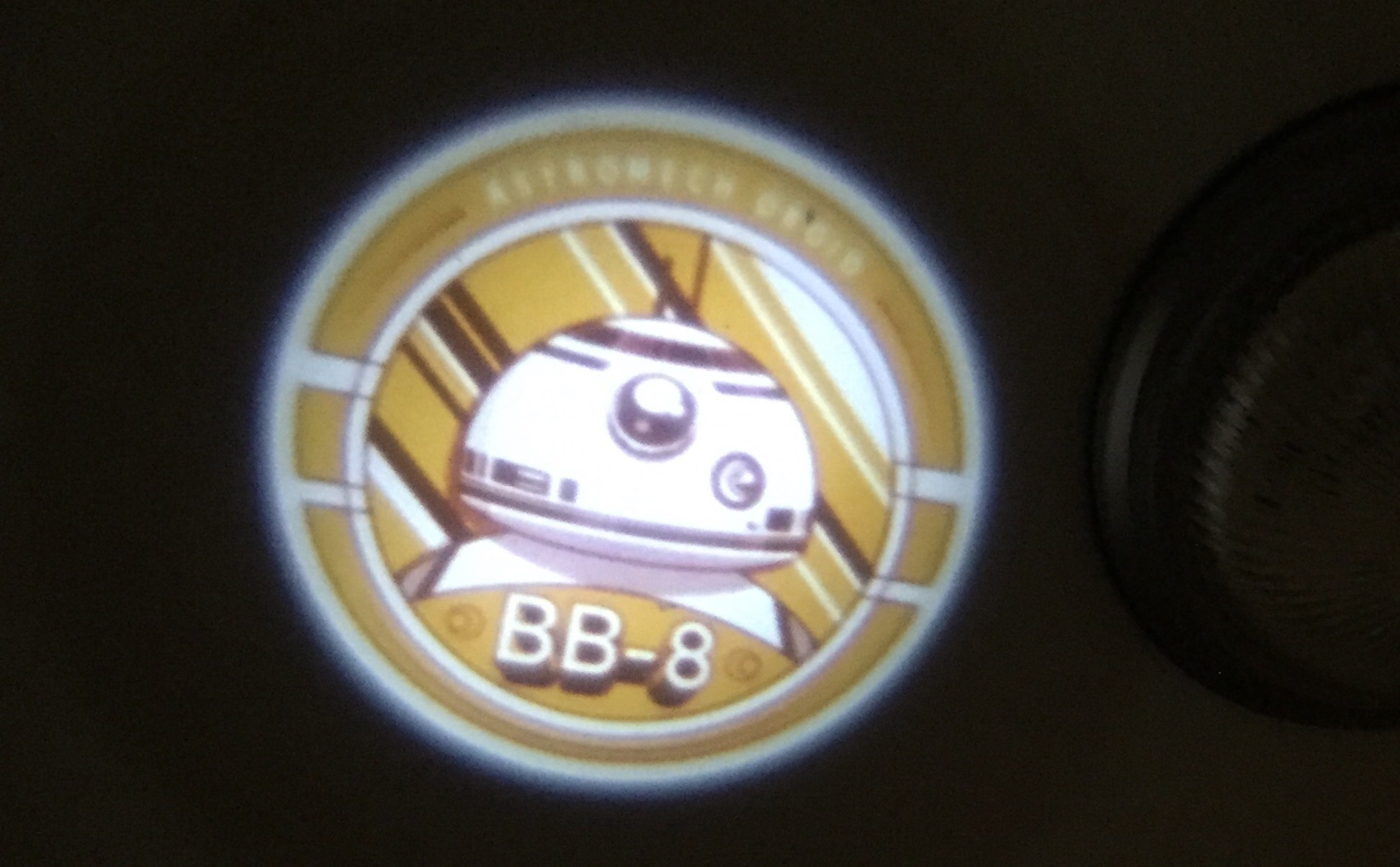
To add to the novelty, an image of BB-8 is projected from the top of the pen when a button on the barrel is held down. It’s a neat feature, I guess, but one that also gets old pretty fast. I suppose this adds some function as a mini-flashlight, but I’m not sure if it’s possible to replace the battery, greatly limiting its usefulness.

At under five dollars, the InkWorks BB-8 Projector Pen is not expensive for a Star Wars memento. However, you will be disappointed if you’re actually planning on using this pen, as you can find a better pen at any convenience store for a fraction of the price. Personally, I’m happy to have it sitting in a cup with my other novelty pens, though I doubt I’ll ever pick it up again.

img_3458

P.S. It looks like InkWorks make the same Projector Pen in a lot of different styles, from Angry Birds to The Walking Dead. However, I’m happy to only have the BB-8 version.

Review: BIC Intensity, Porous Point, 0.5mm

img_3369

To date, one of my favorite pens has been the Sharpie Pen. It’s relatively inexpensive, comfortable to write with, and it has a porous point tip that delivers crisp, clear lines. Every other porous point pen has had to measure up to the Sharpie Pen, and many, like the Sakura Pigma Micron and the Staedtler Triplus Fineliner, have come very close. But for one reason or another, I always go back to the Sharpie Pen.

And then there was the BIC Intensity.

img_3365

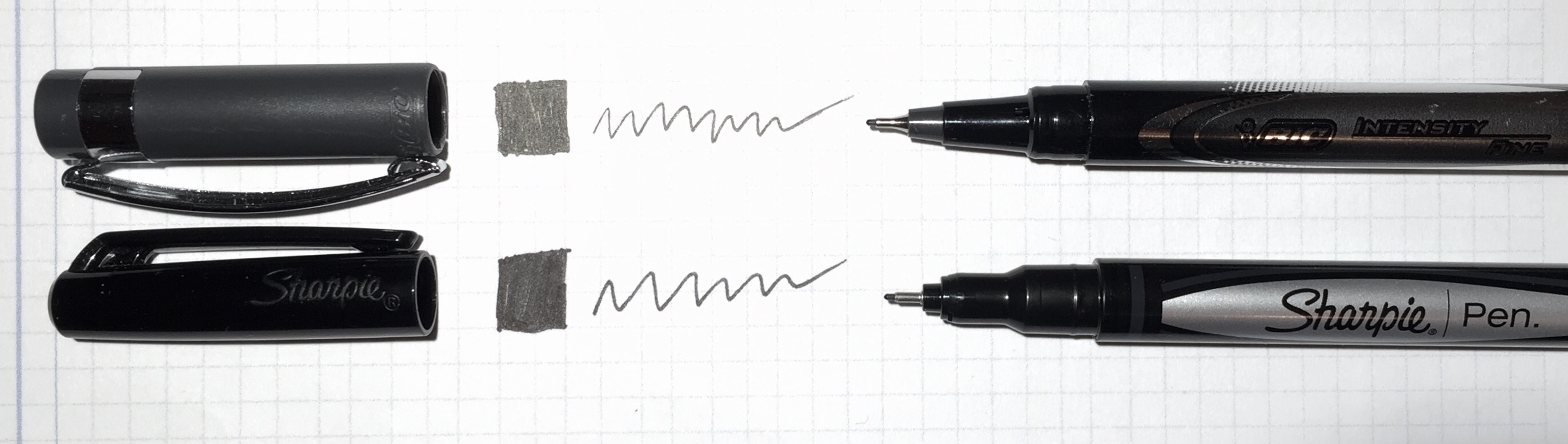
It’s not that the BIC Intensity is much different from the sharpie Pen. In fact, it’s very similar in most ways. The length and thickness are about the same, they are both fully disposable, and they both contain a nice-quality ink (perhaps the Sharpie Pen’s ink is even a bit darker). But the Intensity edges out the Sharpie Pen for one reason; it has a more durable build.

Holding the two pens together, it’s easy to see and feel. The BIC Intensity has a thicker cap with a metal clip. The plastic construction seems harder, and it feels ever-so-slightly heavier. All of this makes the Intensity better for throwing in a pocket, backpack, or bag – perhaps only slightly, but enough to make a noticeable difference.

I still like the Sharpie Pen, and I have no doubt that I’ll continue to use and recommend it. However, it’s the BIC Intensity that I’ll reach for first.

img_3366

Extra Links

  • Rhonda Eudaly’s review points out that the porous tip will break down over time. Though, that’s true for all of these porous point pens.
  • A review at Well Appointed Desk shows off some of the colors. Also, she has a paragraph at the end about why you might choose the Intensity over the Sakura Pigma Micron or Sharpie Pen, but overall she says the performance is very comparable.
  • My favorite line from the Pen Addict review: “Overall, there aren’t any standout negatives, which is a rarity coming from Bic.”


Notes on Snowblind Field Notes

img_3288

Every quarter, Field Notes produces a limited edition run of their popular pocket-sized notebooks, and each time they attempt to do something creative, impressive, or just plain interesting. With the latest, the Winter 2015 edition, Field Notes managed to hit all those notes with their Snowblind notebooks. The catch: you need a little sunshine.

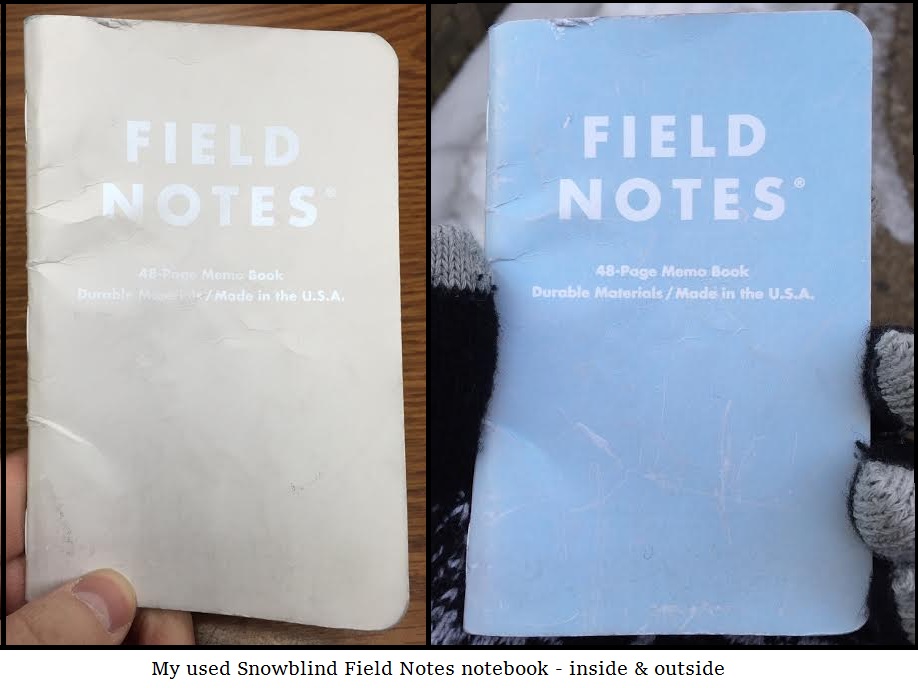
The cover desing – a glittery-white text on a “silk white” background – is supposed to resemble the color palette of a snowstorm. Bring out the notebook into sunlight, however, and thanks to photochromic ink, the white cover turns to a light, powdery blue.

img_3372

The chemical reaction in the ink only occurs with ultra-violet light, so your typical indoor light source wont work. But when you do take the notebook out into the sun, the color-change happens surprisingly quick. Step back in the shade, and the color will slowly fade back into its original white.

Obviously, anyone who spends more time outdoors will get a much bigger kick out of this Snowblind edition. Personally, I never got to see this color change very often, as my notebook spends most of its time in my back pocket. The dreary weather in my part of the country hasn’t helped either, so I’ve considered saving one of these notebooks for the summer when there is more sun to be had.

Then again, maybe the rarity of seeing the color change is the point. When it happens, it feels special. After a while it could start feeling gimmicky. For now, at least, it’s one of my favorite Field Notes editions.

snowblind_fieldnotes

Additional Notes:

  • The Snowblind edition is the standard 3.5 x 5.5 inch Field Notes size with 60# grid paper and white staples (I like that attention to detail). It is number #29 of their quarterly (“color”) limited releases.
  • Of the 30 “practical applications” listed on the inside back cover, my favorites are (#10.) Wassail Recipes,  (#15.) Yeti Sightings, and (#20.) Polar Bear Plunges Plunged.
  • Check out this Instagram picture (by Jinnie at Three Staples). It goes to show, you can really have some fun with the color-changing cover.

Review: Fisher Cap-O-Matic Space Pen, Ballpoint, 1.0mm

img_3388

Perhaps you’ve heard this story of the Space Pen:

During the space race of the 1960s, NASA quickly realized that a standard ballpoint pen would not work in space, as it relies on gravity to function properly. So, after spending millions and millions of dollars, they developed the Space Pen.

The Russian cosmonauts were faced with the same problem. They just used a pencil.

It’s an interesting story about government waste, bureaucratic incompetence, and the elegance of a simple solution. Of course, the story is mostly a myth.

In truth, NASA did originally use pencils in space – both wood-case and mechanical – but they were worried about the tiny bits of eraser, graphite, and wood shavings. All this detritus would float around the spacecrafts’ cabins, potentially damaging sensitive electronics and creating a fire hazard. Then in 1965, Paul C. Fisher  approached NASA with an invention; a ballpoint pen with a pressurized ink cartridge. After testing it for a couple of years, NASA agreed to use the Space Pen, paying Fisher six dollars per unit.

img_3389

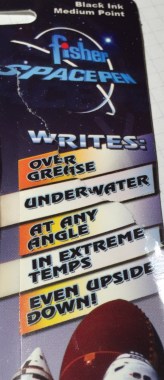
Today you can buy the Fisher Space Pen in several different models and styles, such as this Cap-O-Matic version with a tiny space shuttle embossed in the middle of the barrel. It’s on the small side, comparable in size to the Zebra F-301, making it a pen that’s not particularly comfortable to write with for long periods of time. However, the pressurized ink definitely has advantages that aren’t offered by many other pens. Writing upside-down or against walls is the obvious one, but it also works well for writing on glossy, dirty, or even wet paper.

While I’m not personally inclined to pick up the Fisher Cap-O-Matic Space Pen on a regular basis, it will definitely come in handy during travel. Those who spend a lot of time outdoors will also find a pen like this incredibly useful. It’s got a solid build, and it’s definitely worth the 10 or 20 dollars it costs today. At the very least, people will be impressed that you have the pen that (supposedly) cost NASA millions of dollars to make.

img_3390

Extra Links